

Customers Review
Customer Voices
Easy yet thorough. Say goodbye to "assumption checks" with MIIDEL's accurate results!
Pacific Consultants Co., Ltd.
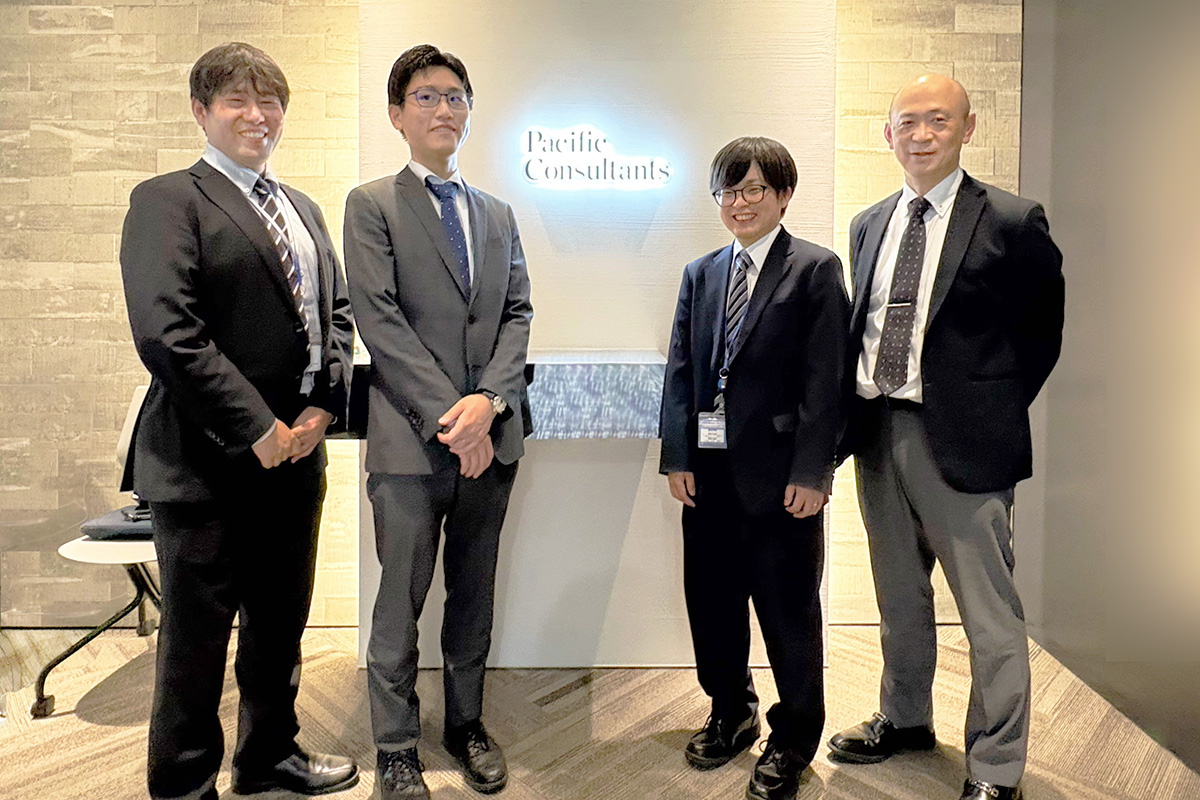
Interviewees
Pacific Consultants Co., Ltd.
Transportation Infrastructure Business Headquarters, Structural Department, First Bridge Office
Head Mr. Katsuyuki Ooya
Kyushu Branch, Transportation Infrastructure Business Department, Structural Office
Head Mr. Tsutomu Hashimoto
same
Mr. Tomoya Takeguchi
Chugoku Branch, Transportation Infrastructure Business Department, Structural Office
Mr. Ryosuke Ozawa
Pacific Consultants is a leading construction consulting company deeply involved in social infrastructure development both domestically and internationally for over 70 years since its founding. With advanced civil engineering technology, it supports the construction of highly public facilities such as roads, transportation, ports, and airports. This time, we gathered with those involved in the design of road structures such as bridges nationwide.
MIIDEL (hereafter M): First, could you tell us about your work and how you use MIIDEL in it?
Mr. Hashimoto (hereafter without honorific):Our main work is planning and designing structures such as bridges within social infrastructure services, specifically transportation infrastructure like roads and traffic facilities. After design completion, construction is done by general contractors, but recently, such structures are also required to undergo close visual inspections once every five years*, so we also handle inspections for maintenance and repair design.
M: So you play an active role in the design phase that determines large-scale structure construction projects.
Mr. Takeguchi (hereafter without honorific):Since I mainly design bridges, I often look at drawings and use MIIDEL to check whether correction instructions for discrepancies with calculation documents have been properly fixed. Previously, I used to print out the drawings and check them like this...
M: By "printing out," do you mean you actually output them on paper?
Takeguchi:Yes. Numbers and fine details are easier to compare on paper.
Hashimoto:We print it out, check correctness with a red pen, write instructions if there are mistakes, return it to the CAD operator, then check the corrections again... It's a repetitive and time-consuming task to verify details thoroughly.
Mr. Ozawa (hereafter without honorific):But since using MIIDEL, we've found unexpected errors, and conversely, by discussing them, we understand the other party's intention like "We fixed it for this reason," leading to new discoveries.
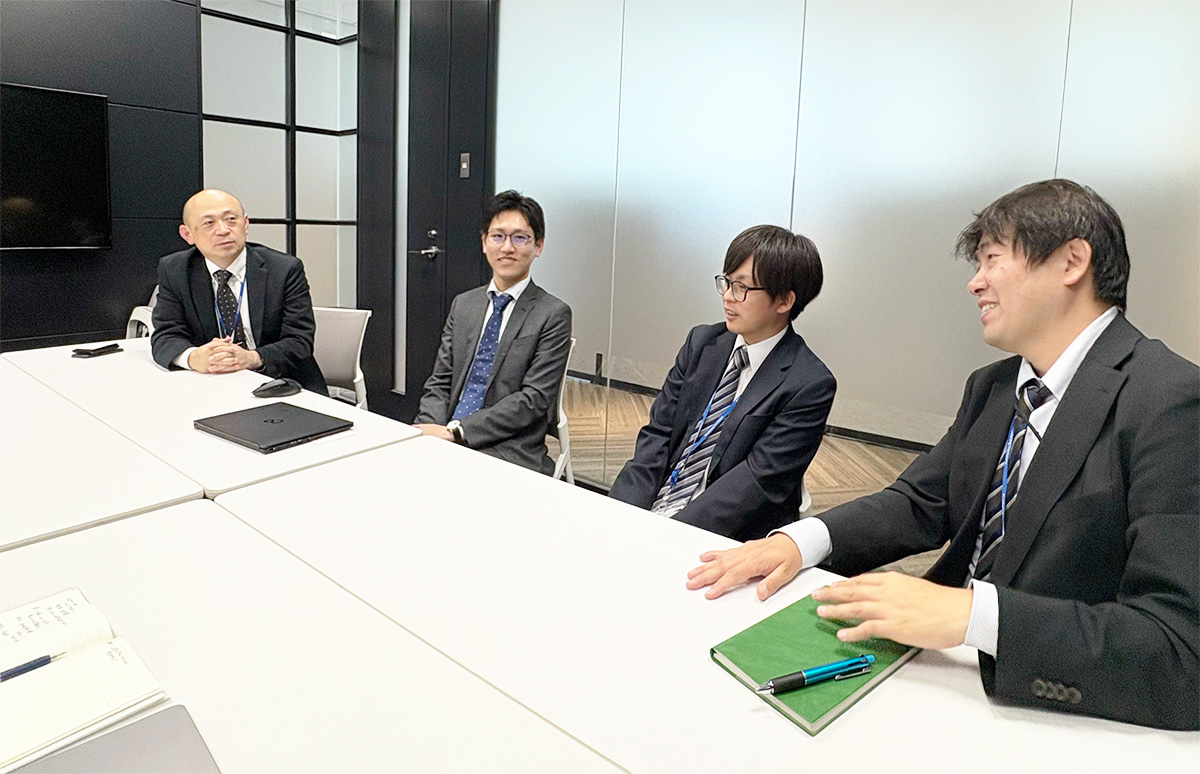
We visited the Kyushu Branch and spoke with them (from left in the photo: Mr. Hashimoto, Mr. Ozawa, Mr. Takeguchi, Mr. Ooya).
M: I see. So it's not just error detection, but the content of checks and feedback methods have evolved.
Mr. Ooya (hereafter without honorific):Depending on the project, the drawings we handle can number in the hundreds or thousands. We must deliver results within set deadlines, so we want to make checking as efficient as possible. That affects whether we can have creative or refinement time. MIIDEL allows digital comparison without human bias, objectively showing differences, which I think is very good.
M: The phrase "human bias" is very interesting. Does it mean the comparison results vary depending on the person?
Oya:When checking alone, there's inevitably a bias of "it should be correct," which can cause oversights. Therefore, a "third-party check" is always necessary, but using MIIDEL enables checks that eliminate such biases.
M: The rationalization of time- and labor-intensive checking work has been highly appreciated by other customers as well.
Takeguchi:We don't only do that. We handle many tasks in parallel besides drawings.
Oya:Everyone is just busy. The challenge was how to secure checking time while ensuring proper working hours and deadlines. Our department exists nationwide, each responsible for regional bridges, and through their connections, quality verification technology development became an issue. So we decided to try existing technologies and software, and found MIIDEL online. MIIDEL offers a free trial period, which we gratefully used extensively.
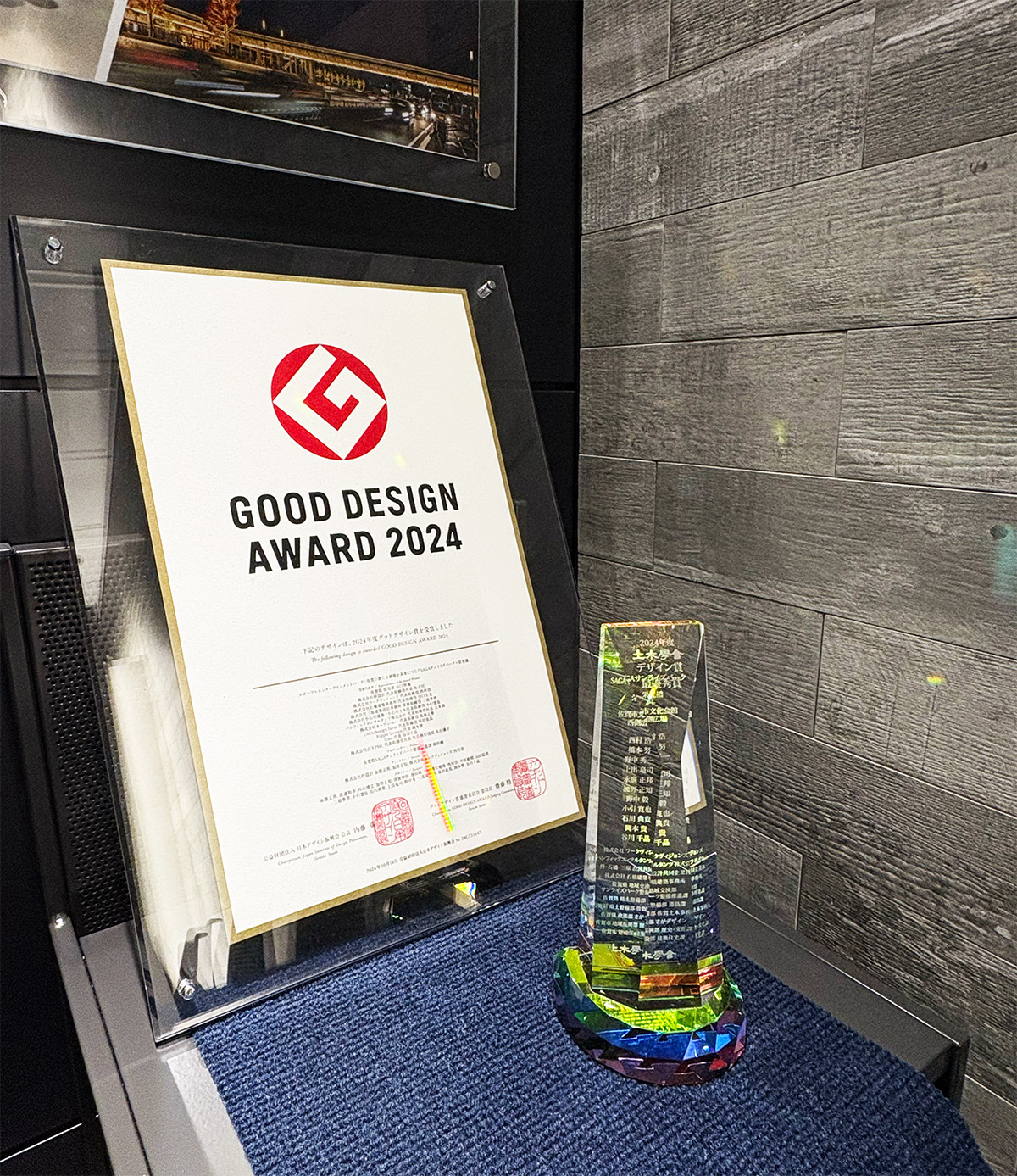
Photo: Various awards and plaques decorating the entrance (partial display).
M: After trying it, what were the key points that led to adoption?
Oya:It automatically rearranges drawing order, automatically detects layout differences, and accurately finds only the differing numbers—it's easy yet covers the fine details. Also, it supports software we often use, which was good. Since we often check differences in document files like reports and calculation sheets, we look forward to the newly released Docs (MIIDEL Docs).
M: So comparison work is not only for drawings.
Takeguchi:With drawings, the pages to compare are often clear, but structural calculation documents can overflow to the next page as lines increase, so Docs, which searches the entire file before and after changes for comparison targets, is something we want to utilize going forward.
Ozawa:Speaking of which, when I checked a report with MIIDEL before, I was surprised it even showed font differences. Like one character was Gothic! (laughs) Yet it can conveniently ignore line thickness differences in drawings. I really think it's convenient. There's hardly anything to complain about. When sharing MIIDEL check results with clients, they were very interested, asking "What software is that?"
M: Thanks to your active use, it has spread to those around you as well.
Oya:Currently, MIIDEL is introduced in departments handling road structures nationwide from Hokkaido to Kyushu, and many people want to adopt it when introduced internally. Other departments are considering different uses, so please support us when considering introduction!
M: It is an honor to be introduced...! We will continue to strive to provide better support with more convenient functions and software, including 'MIIDEL Docs.' Thank you very much for today.
* Following the 2012 Sasago Tunnel ceiling slab collapse, the Ministry of Land, Infrastructure, Transport and Tourism amended the Road Act. It made close visual inspections mandatory once every five years for all tunnels and bridges measuring 2 meters or longer.
* The official website of Pacific Consultants Co., Ltd. ishere
Back to article list