

Customers Review
Customer Voices
Used in a project handling thousands of drawings, with great expectations for further automation!
Chiyoda Corporation
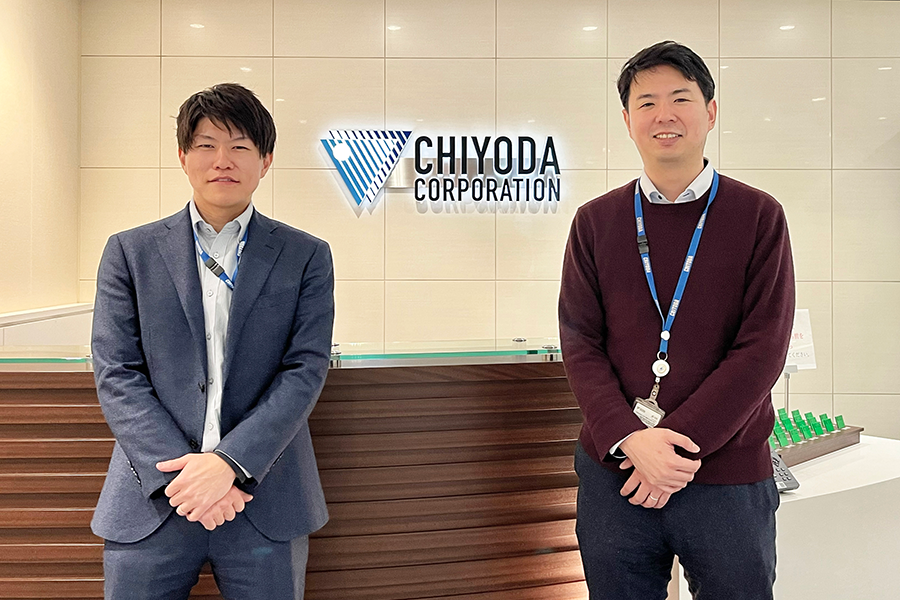
Interviewees
Chiyoda Corporation
Earth Environment Project Headquarters
Life Science Project Department
Advanced Industries Project Section
Also CDO Office Digital Officer
Mr. Satoshi Tanaka
Domestic Energy Environment Project Department
Chemical & Gas Project Section
Mr. Shuhei Sato
Chiyoda Corporation is a comprehensive engineering company that handles numerous projects worldwide, focusing on plant design, procurement, and construction (EPC) across a wide range of fields including energy such as oil and gas, chemistry, environment, energy conservation, industrial equipment, storage batteries, and life sciences. They have been using MIIDEL for over six years since version 3. This time, we asked about their usage and future requests.
MIIDEL (hereafter M): Chiyoda Corporation handles planning and construction of large plants both domestically and internationally. Do you also handle a large volume of drawings on a daily basis?
Mr. Tanaka (hereafter without honorific):Depending on the scale of the project, it amounts to 20 to 40 king-size binders, which translates to several thousand sheets.
Mr. Sato (hereafter without honorific):In a domestic project I was in charge of, we delivered over 150 king-size binders to the client.
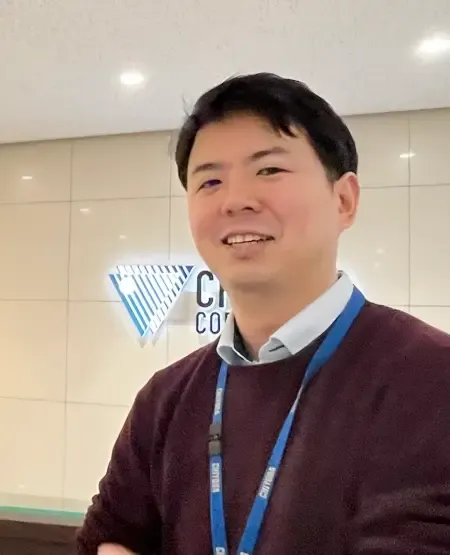
Mr. Tanaka, who first introduced and utilized MIIDEL in his own project
M: That's an incredible amount. It's about the size of a small moving load, isn't it?
Tanaka:Comparing drawings—between those received from outside and those created in-house, or at the timing when revision numbers change—is a very routine task for each person in charge, but making it perfect is difficult. However, it's too late if you realize issues after the product is completed.
Sato:Even if the received drawings have cloud marks indicating changes*, other parts may have unintentionally changed or reverted to previous versions. It would be ideal if checking only within the cloud marks sufficed, but if there is any uncertainty, you end up having to check everything, which takes a lot of time.
M: Moreover, since there are that many drawings... I can really sense the difficulty. Was 'improving the efficiency of drawing comparison' an issue raised within the company?
Tanaka:The reason I first thought to try MIIDEL was that I wanted to try something new in my own project, and I learned about its existence from an article in 'Nikkei Construction.' Unlike overseas projects on the scale of hundreds of billions of yen, the domestic projects I am in charge of are more flexible and can be introduced quickly. If this makes the work easier, I thought it would also be a good measure as part of the company-wide digital productivity improvement initiatives at the time.
We introduced it in 2018, and at first I used it only for my own project, but later we expanded it to the entire headquarters and introduced it to group companies so they could use it as well.
M: How often do you usually use MIIDEL?
Sato:Rather than using it daily, it feels like there is a peak period for drawing checks. When the revision number of the drawings changes, which often happens in the first half of the project, I use it. Because sometimes the policy changes drastically. In the latter half, changes decrease, so I no longer start MIIDEL just to check one or two changes.
Tanaka:So really, I want to integrate MIIDEL into our business processes. Ideally, MIIDEL would be integrated into the document management system that we share with internal and external staff, and when the revision number increases, it would automatically compare everything and generate reports... That would be ideal. But since the management system side would also require interface development and such, the hurdle is very high (laughs).
M: I see, considering the thoroughness of checks, strengthening automation might be one direction. On the other hand, is there any experience using it so far that left a strong impression of 'this really helped'?
Sato:The other day, I helped with a government application for a project, and the government asked us to mark all the changes compared to the initial application. This included construction drawings, equipment drawings, and documents—everything. But the completed documents* don’t have cloud marks on the drawings. Moreover, it wasn’t just a comparison with one or two previous revision numbers, but with the initial application, so it was completely unclear. The submission deadline was tight, and if this application was delayed, the contract delivery date with the client would also be delayed, so it was a situation where we absolutely could not be late. So MIIDEL really helped at that time. I was just helping out and didn’t know the project history, but even so, we were able to divide the work and check accurately in a short time.
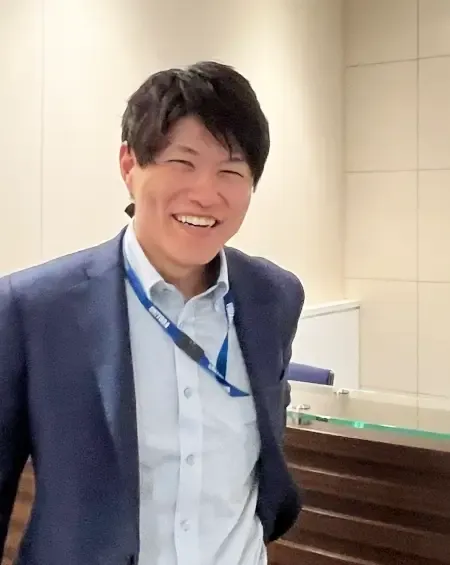
Mr. Sato, who shared a case of using MIIDEL at the time of submitting completed documents
M: That is a very MIIDEL-like episode! I’m glad it was helpful in a difficult situation. Lastly, if you have any expectations for MIIDEL going forward, please let us know.
Sato:I would really appreciate it if MIIDEL could read the file names in the folder where drawings are stored, match the files to be compared, and automatically output the comparison results. The way file names are assigned is mostly standardized, so it could read and judge the different versions.
Tanaka:This relates to the earlier talk about automation, but I think the key going forward is how to reduce the steps to reach MIIDEL. That is, how much you can get to the result report without consciously thinking about launching the software or making corrections after comparison.
Functions that were not available when we started using it have been added one after another, and with such improvements, I think we can increase the utilization rate within the company even more. In our work, the task of 'comparing and confirming with previous drawings' will never disappear.
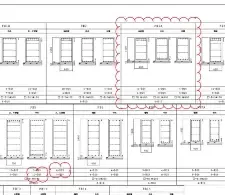
*Cloud mark = a mark used on architectural drawings, electrical equipment drawings, etc., to indicate areas of change.
It is called a cloud mark because it is enclosed by a fluffy cloud-like line (see figure below).
*Completed documents = documents submitted upon completion of construction.
Includes implementation specifications, calculation documents, construction drawings, equipment drawings, construction management records, operation manuals, etc.
Back to article list