Joint Cooperation Project with Toyota Kyushu to develop [Defective Product Analysis and Sensing System]
2021/6/9
TRIART,INC. (Iizuka City, Fukuoka, Japan; CEO: Kentaro Imazu) and Toyota Motor Kyushu Co., Ltd (Miyakawa City, Fukuoka, Japan; CEO: Nagata RI) have started a trial for a new 'Defective Product Analysis and Detection' System' in the Lexus Production line of Kyushu Miyata Factory. This system seeks to enable collaboration between workers and AI systems to cooperate and detect ultra-fine defects that were previously only detectable by experienced workers.
It is designed to detect minute differences from thermal images in the shape of mass-produced panels and the steel sheet's elongation during the pressing process. These discrepancies can lead to cracks or fractures in the panels and can be used as a telltale sign of potential future defects. Previously, we had to rely heavily on skilled workers with plenty of experience to intuitively 'feel' the panels which makes it difficult to standardize.
TRIART uses its proprietary technology, Composite AI [4CAS]*1 which has a strong track record in visual sensory information processing. It functions by generating an ideal image data or master image as a reference. By calculating the differences (expansion points, contraction points, etc.) between the produced panel and the master image, we have made it possible to evaluate all the panels that are produced every 5 seconds. As a result, the data can be used to determine what characteristics are likely to cause defects, reaching detection accuracy that is on par with experienced workers.
This system's reliability and accuracy are enhanced by not solely relying on the AI system but are guided by human workers who provide rough shape specifications at intermediate steps. This reduces the surface area that needs to be inspected and improves the self-learning process to be more accurate and efficient.
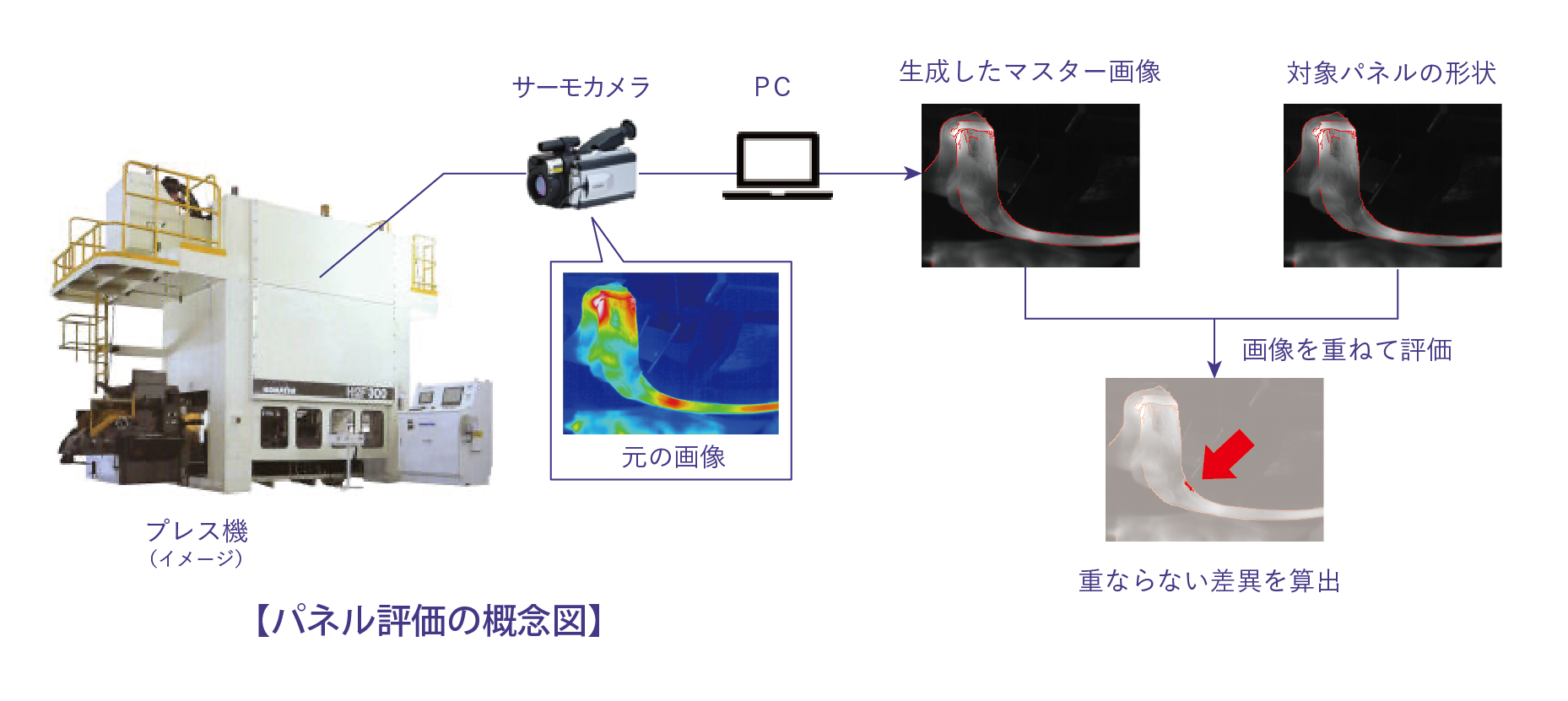
Digital Transformation (DX) involving AI often tries to present itself as being fully autonomous, but in tasks where workers have already acquired specific skills or require human judgment, we believe that it is better to combine both. Incorporating AI into the workflow to complement human workers would greatly speed up processes while maintaining or even improving work quality. It becomes a flexible and cost-effective system in factories that have multiple production lines where universal standardization may not be possible.
This trial (Composite AI [4CAS]} is not intended to be a black box that is fully controlled by an AI but instead a system that consists of a series of control AI. The system itself was developed jointly by Toyota Kyushu and TRIART and serves as a great example of how humans and AI can work together equally in the physical space of the manufacturing Industry.
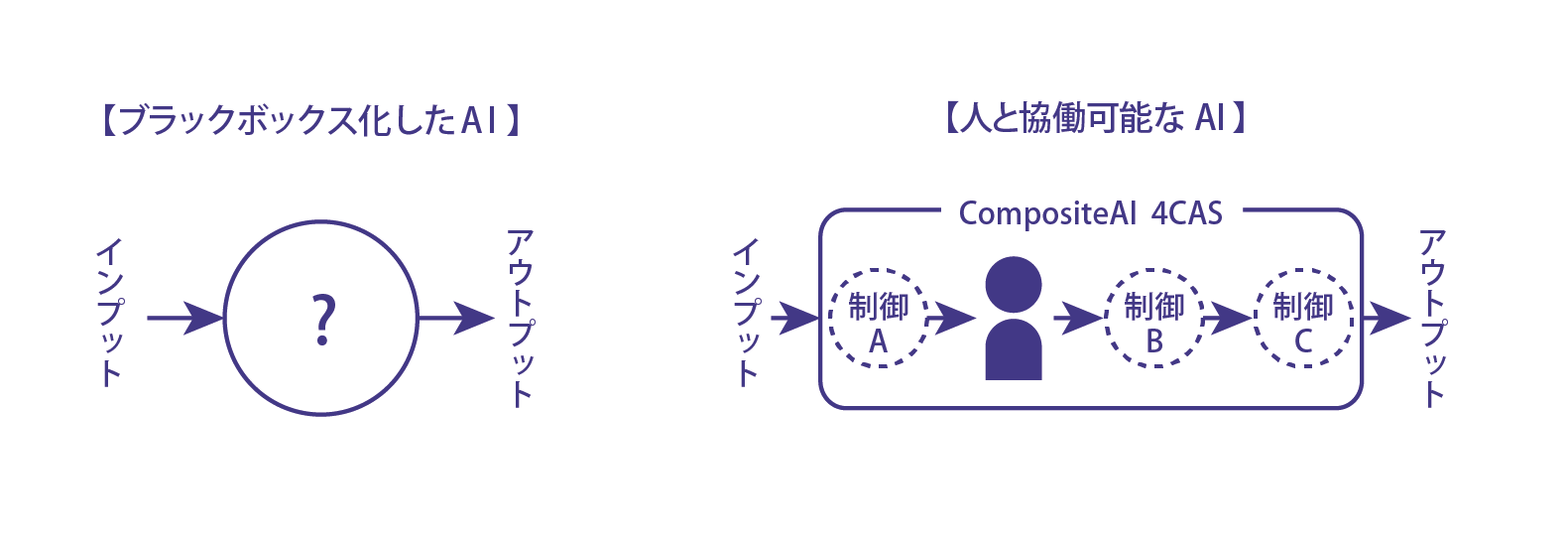
Toyota Kyushu is a world-renowned Lexus production plant with countless experienced skilled workers and produces some of the world’s highest quality products*2. It is also simultaneously on the leading edge of developing production technologies. We hope new production technologies will allow experienced workers to grow and develop their skills further while also enabling factories to produce more and better quality products in the future
*1 Composite AI (Technical name [4CAS] is a proprietary series of multiple control system AIs with a proven effective track record in processing qualitative information that is difficult to quantify, simulating human sensory judgments
*2 The Miyata factory has won the platinum awards a record-tying 5 times in the 'Assembly Line Quality Awards' in the IQS (Initial Quality Study) by the American marketing company, J.D. Power.
This news was also featured in the Japan Economic Newspaper (Nihon Keizai Shimbun)
