User Testimonials
MIIDEL was actively used in the construction of our new Stadium. I want people who are avoiding it to try it out first!

KUMAGAI GUMI Co., Ltd.
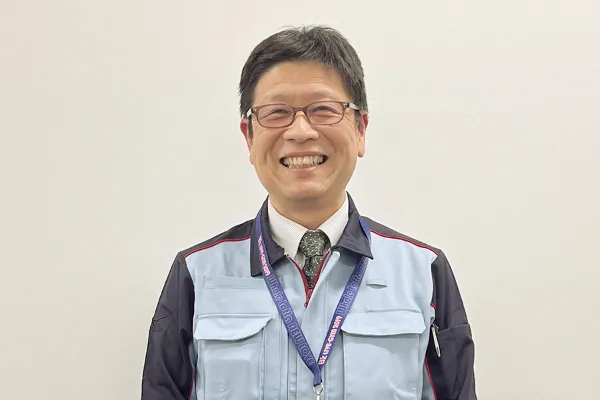
Interviewee
Kumagai Gumi Co., Ltd., Hokuriku Branch
Construction Department, Site Manager
Mr. Takemoto Hiroyuki

Kumagai Gumi Co., Ltd, is a construction company originating from Hokuriku. They boast high technical capabilities having been involved in the construction of various great structures domestically such as the Kurobe Dam Kansai Electric Power Tunnel and Seikan Tunnel in Japan. Abroad, their most notable project was the construction of the tallest skyscraper at the time, the Taipei 101 (508 meters tall).
Today, we are talking with Mr Takemoto, who has been using MIIDEL since 2019 and recently completed the construction of a soccer stadium (The Kanazawa Go Go Curry Stadium), he will be sharing how MIIDEL was used.
MIIDEL(M): Could you please tell us again how you first discovered MIIDEL, Mr Takemoto?
Mr. Takemoto: I first had the opportunity to hear about it from Kyoei Sangyo when we were implementing a cost estimation system. When I heard about MIIDEL, I immediately thought "Wow, I want to try it out myself". The timing was perfect since TRIART was exhibiting at the Tokyo Big Sight at the time, so I could visit and learn more about it.
M: Thank you for visiting the exhibition! At that time, we discussed many of your inquiries that led to your decision to give MIIDEL a try. It has been several years since then but from what I understand, you were recently involved in the construction of Kanazawa's new landmark, the "Kanazawa Go Go Curry Stadium".
Takemoto: That is right. It was quite a unique project, being the first football-specific stadium in the Hokuriku region. It ended up as a wonderful venue where fans and players can interact closely with each other. In the early stages of the project, we used MIIDEL to review hundreds of drawings several times. This was done to ensure there were no discrepancies between the initial drawings that were used for cost estimation and the construction drawing on-site.
Any changes or uncertainties had to be consulted with the designers to determine the best way to proceed and that's why we were constantly comparing new drawings that came in. The finalized drawings, comparison results, and revised version were color-coded in red, yellow, and blue and compiled into binders to be used on-site. Given that we were building a stadium, many parts, including the seating areas, had to fit into sloped and angled spaces which were challenging.

Kanazawa Stadium, opening in February 2024
M: It must have been difficult to turn flat 2-dimensional drawings into 3-dimensional structures
Takemoto: Designers can't draw every single cross-section of the building. It is up to us to figure out how certain areas are structured. Without considering details such as where rebar and equipment should go, the building would not be completed.
Within our company, the department responsible for BIM also seems to be using MIIDEL quite a lot. I believe they are using it by converting 3D BIM data into PDFs to be reviewed.
This applies to more than just this specific project. Design drawings can't easily accommodate structural changes, so when aesthetic or design adjustments are needed, they directly affect the project's cost and timeline. This is why it's important to get a clear understanding of the overall project as soon as possible.
M: We often recommend our clients to use MIIDEL's "Three-point correction" feature which overlays structural and design drawings to identify any discrepancies.
Takemoto: I believe it also works for construction drawings as well. I think it would be great for apartment buildings.
M: Is there a specific way you think it could be used for apartment buildings?
Takemoto: In apartment projects, we need to make sure the drawings in brochures made by the developer are consistent with our construction drawings.
Even slight misalignments can cause significant inconvenience for the end users who are preparing to move in. For example, furniture that seemed to fit in the plans but not in reality may lead to various other complications.
M: That's true, brochures are available before construction has even begun and potential residents use these to make their decisions.
Takemoto: In the past, a designer would create the initial plans, which would later then be simultaneously developed into promotional materials (brochures) by the developer and construction drawings by us. Throughout this process, we communicate constantly with each other to discuss things like "What should we do here?" or "How can we solve this?"
However, with so many detailed revisions and adjustments, some changes are bound to be overlooked. We used to physically match the scale of the drawings on paper manually to check for discrepancies. Although I am no longer involved in apartment projects, if I had MIIDEL back then, it would have been much better.
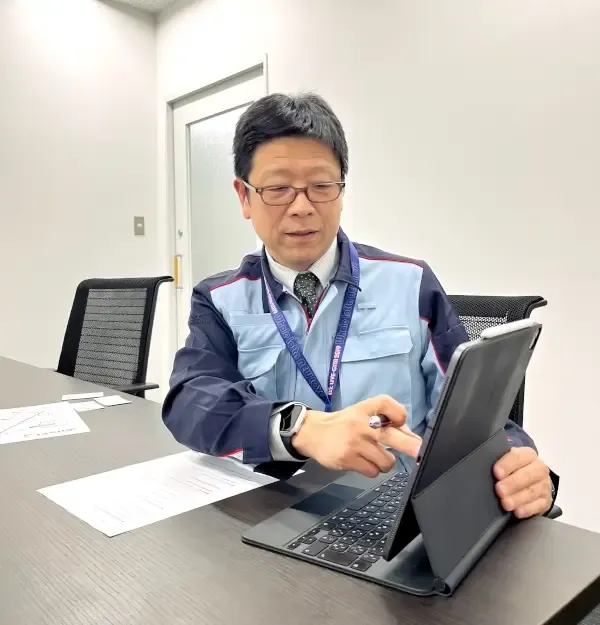
Mr Takemoto kindly brought along actual comparison images for us.
M: Matching the scales of different types of drawings is something MIIDEL excels at. This feature is especially useful in the construction industry where many parties such as contractors and clients are involved. There could even be more ways to use it.
Takemoto: One of the great things about MIIDEL other than reducing work hours, is that it makes explaining things much easier. When you show them the result and point out the differences, they can understand it immediately. So I hope everyone will give it a shot and not be stuck in their old ways..。
*BIM: A workflow or software used to digitally represent the physical and functional characteristics of a building. It involves the creation and management of 3D Models that integrate various aspects of a construction project including architectural design, construction, and maintenance management.
